Introduction to the 5.11-Micrometer Feature
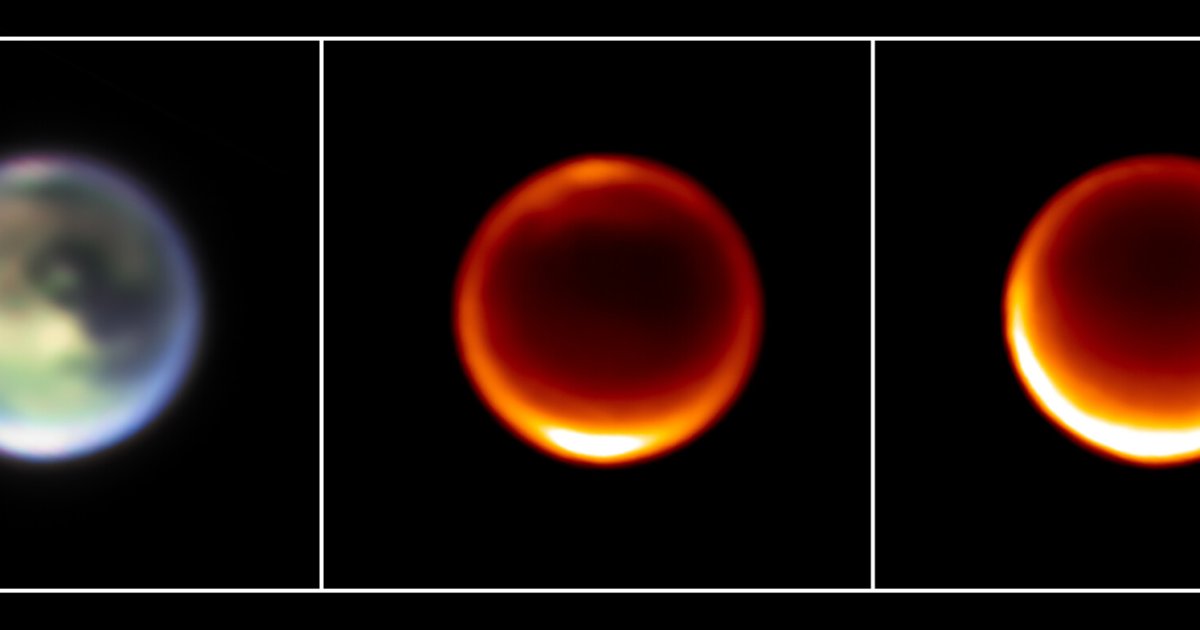
The James Webb Space Telescope (JWST), utilizing its Near Infrared Spectrograph (NIRSpec) and Mid-Infrared Instrument (MIRI), has identified a peculiar 5.11-micrometer infrared absorption feature on both Saturn's moon Titan and the dwarf planet Pluto. This discovery, reported by a team from the Paris Observatory led by Bezard and Lellouch, suggests a shared chemical signature that could provide new insights into the surface chemistry of these distant worlds. The findings are detailed in their recent paper published on arXiv.
Understanding the Infrared Signature
The 5.11-micrometer feature is intriguing because it appears on two very different celestial bodies. Titan, with its thick nitrogen-rich atmosphere and methane lakes, and Pluto, with its icy surface and tenuous atmosphere, both exhibit this absorption feature. Scientists estimate that this could be indicative of a common molecule or a similar chemical process occurring on both bodies. The presence of this feature in the infrared spectrum suggests that it is related to surface or atmospheric chemistry, possibly involving nitrogen or methane compounds.
Potential Chemical Processes
The identification of this feature could point to complex organic chemistry. On Titan, where methane is abundant, the interaction between nitrogen and methane under the influence of solar radiation could lead to the formation of complex hydrocarbons or nitriles. Similarly, on Pluto, the presence of nitrogen and methane ice might undergo photochemical reactions that produce similar compounds. This shared feature could be a clue to understanding the chemical pathways that lead to the formation of these molecules.
Implications for Surface Chemistry
The detection of this feature opens up new avenues for exploring the surface chemistry of Titan and Pluto. On Titan, the interaction between atmospheric components and the surface is a key area of interest, especially with the upcoming Dragonfly mission. Dragonfly, a rotorcraft lander mission by NASA, is set to explore Titan's surface and atmosphere in the mid-2030s. The presence of the 5.11-micrometer feature could guide Dragonfly's investigations, helping to target areas where these chemical processes are most active.
Dragonfly Mission and Future Research
Dragonfly's mission objectives include studying prebiotic chemistry and the habitability potential of Titan's environment. The detection of this infrared feature could provide specific targets for Dragonfly's instruments, allowing it to analyze the surface and atmospheric interactions in greater detail. Understanding the nature of this feature might also help in identifying similar processes on other icy bodies in the solar system.
Conclusion
The discovery of the 5.11-micrometer feature on both Titan and Pluto by the JWST is a significant step in understanding the complex chemistry of these distant worlds. While the exact nature of the molecule responsible for this feature remains uncertain, its presence on two distinct celestial bodies suggests a potentially universal chemical process. As scientists continue to analyze data from JWST and prepare for future missions like Dragonfly, the mystery of this feature will undoubtedly drive further research into the intricate chemistry of our solar system.